

The Bulldog Breed
John Griffiths meets some of those enthusiastic volunteers who have kept major events like the Bulldog Rally running successfully for the past 45 years
SO that’s it then. The secret’s out and it’s bad news for couch potatoes - being a motorsport fan doesn’t mean Sunday afternoons in front of the telly, a drink in one hand and a remote control in the other.
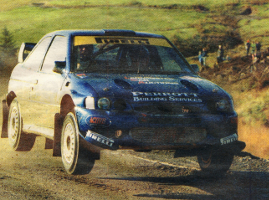
Like so many other major events in the motorsport calendar, it only takes place because something like 500 volunteers give up their time to act as officials and marshals on the day, as well as those involved in planning the event for up to a year beforehand.
This sort of commitment isn’t only for the benefit of the big boys in their heavily- sponsored, works-backed cars but also for the potential stars of tomorrow; the enthusiasts who spend every spare penny and every spare minute working on a Ford Escort Mark II or Vauxhall Nova so that they can compete too.
Massive
Those who took part in the Bulldog were using the same sort of slippery gravel and dirt stages which in the past have challenged the likes of Russell Brookes, Pentti Airikkala, Ari Vatanen, Henri Toivonen and then Markku Alen, Michele Mouton, Stig Blomqvist, Tony Pond and David Llewellin.
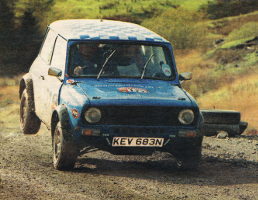
The drivers who compete in Minis, Novas, Nissan Micras - and of course Ford Escorts - enjoy it every bit as much as the National A crews in their Evos and Imprezas; perhaps more so because they don’t have to worry about sponsors hungry for points and media exposure.
For example, some of the biggest smiles after the Bulldog must have belonged on the faces of Rob Belcher of Bridgnorth and co-driver Richard May, of Ditton Priors.
The two Wolverhampton club members might have finished 27th and last in the clubmans class in their 1,380cc Mini - but what a tremendous sense of satisfaction to find they were only one place behind ex- Formula One driver Mark Blundell in an MG-backed ZR rally car. And in their first big event, too.
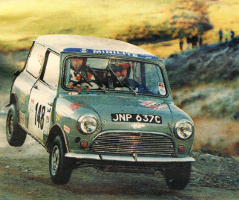
Two illustrations, perhaps, that you don't have to be bankrolled by big corporate bucks to be competitive.
In the historic class the Mini crew of Clive King from Dudley and co-driver Bob Ward from Oldbury took fourth place, beating many Porsche 911s and Lotus Cortinas along the way.
Overturned
It wasn’t such a good day for all the local drivers among the 180-strong entry, though.
National A drivers Richard and David Lewis, from Norton, near Bridgnorth, retired on the first stage after not one but two accidents.
The first was a minor affair, but just as they were re-starting the following car ran into their Ford Escort Mkll, damaging it too badly for them to continue.
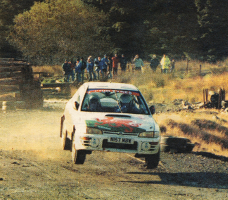
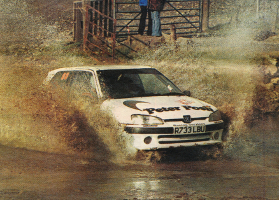
One crew who overturned on the 16-mile Dyfi stage were still grinning broadly when the rescue crew arrived, despite a narrow squeak and a very second-hand-looking car. I’m not sure what it was - I haven’t had much practice at recognising cars from their undersides.
Exiting a corner they ran wide and a rear wheel went over the edge, flipping the car over and down the mountainside until it came to rest 30 feet or so below, its further progress halted by some well-placed trees.
The ‘dad and lad’ crew of James and Ian Graham from Cheslyn Hay were enjoying their return to the Welsh Forests, too, even though they’d had to almost completely rebuild their historic Saab after an excursion to the same area last year.
"British motorsport might appear to run on roads, or rubber or high octane petrol, but really what keeps it running is sheer enthusiasm."
On that occasion the car somersaulted end over end, and then barrel-rolled three times. Fortunately they finished the Bulldog in better condition.
“The only injury was when I was trying to open the door. The car was on its side so I put my boot on the back of James’s seat to climb out and caught him in the face.”
Cannock Car Club member Ian bought the 841 cc two-stroke Saab in 1979 and converted it for motorsport, before handing over the controls to James just after his 19th birthday - the partnership is now in its third year.
The unsung heroes of rallying, though, are the marshals, course officials, timekeepers and the many others who don’t only ensure the drivers have their fun, but also that they - and the spectators - are safe.
Any big sporting event has its logistical headaches; such problems are only magnified when the event is constantly on the move from stage to stage, forest to forest and these enthusiasts play as important a role as the drivers. Without them, it just wouldn’t happen.
Many, but by no means all, compete in some form of motorsport themselves and appreciate the essential roll such voluntary contributions play at all levels. They’re putting something back into the sport they love.
There are others who would probably turn out to watch anyway, and apart from helping to ensure such events continue, they're rewarded with some of the best views of the action.
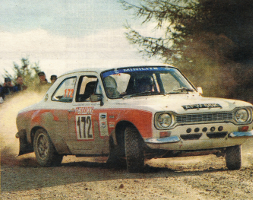
If you get the bug and you’ve got the budget, you can progress through autotests and sprints to single venue rallying (like a stage rally but confined to one site).
Entry would cost around £140, and how much you spend on the car is really up to you - some, but not all, for example, will use racing tyres to give them a more competitive edge.
From there the next step up is into stage rallying, in the National B or clubmans class, and finally up to National A and the British Championship.